

Fern trees aren’t unique to New Zealand but when you see a forest dotted with them there is no mistaking where you are. They are ubiquitous on both the North and South Islands and make up an important part of the forest canopy here. It’s not a coincidence that the national symbol is the Silver Fern or Ponga and you will see fern leaves used as a symbol on anything from the New Zealand Coat of Arms to KiwiRail to the local plumber’s van.
I’ve been fascinated by them since my first visit here. They are something that easily marks out that otherwise this might look like any other forest from North America or Europe or whatnot. But it’s not. It’s got fern trees. You don’t have to know the difference between a Ponderosa and Lodgepole Pine or even Oak and Maple. You see the fern tree and know that you’re someplace different.
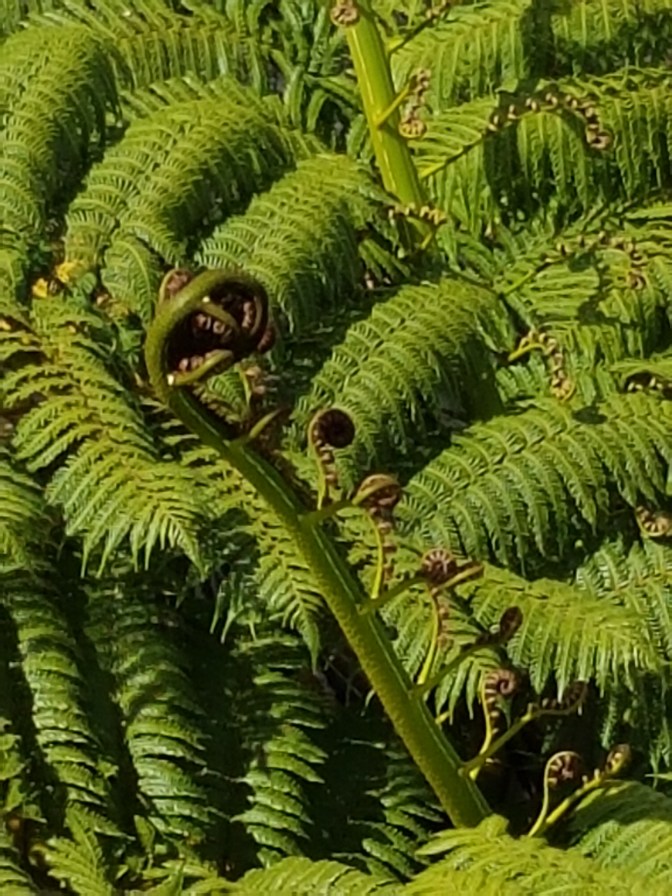
Like all ferns, fern trees spread via spores that are blown by the wind. Unlike a true tree, the trunk of a fern tree is not made of woody tissue but is instead essentially a continuation of its roots and is actually fibrous. In fact, some fern trees can be transplanted by lopping off the top and replanting it. There are seven species of fern trees in New Zealand, five of which are found nowhere else. The Silver Fern as mentioned, is the national symbol, and is named for the silver coloring on the underside of the fronds. The maori even used it to line paths so they were easier to see in the dark. The Mamaku, or Black Tree Fern (the ones you see in these pictures around our house) is named for its frond stemswhich have a black underside, and is the tallest of the bunch, reaching up to 20 meters tall!
The trees grow by generating new fronds above the existing ones. The unopened, curled up frond is known by its maori name, koru, and is also a common symbol through the country and in maori art. It symbolizes new life, strength and growth, which come to think of it might make it a good symbol for our move here.

 Kiwi Bound